
DEDICATED AREA · EMERGENCY PREPAREDNESS
PREPARATION CREATES ROOM TO ACT.
Preparedness protects essential household functions: water, food, warmth, health, information, communication and orderly decisions about shelter or evacuation.
COMPLETE REVIEWED LEARNING PATH
Planning, supplies, outages, warnings, hazards, health and shelter systems
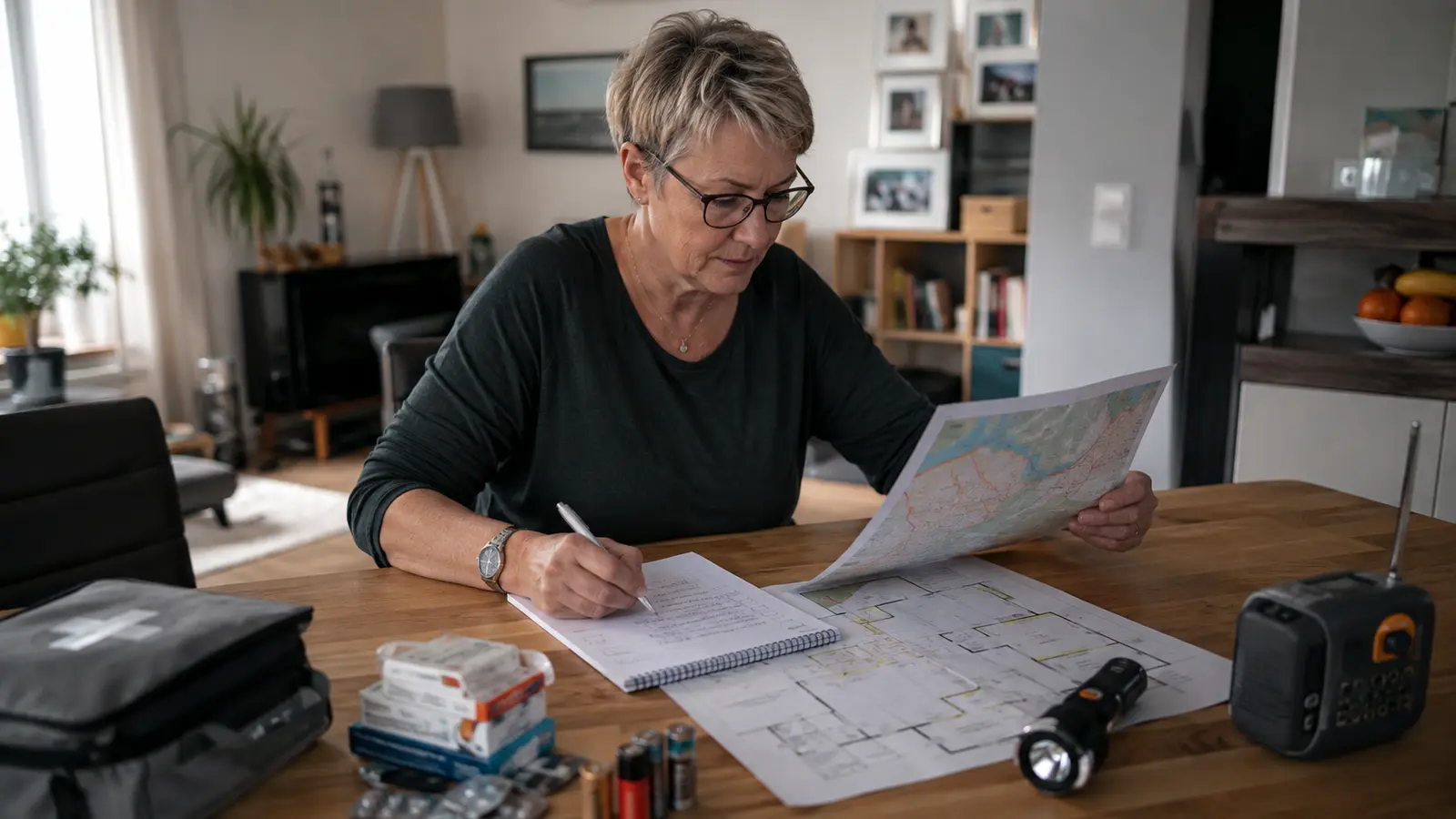
Build a personal risk profile
Not every hazard is equally likely everywhere—but the consequences often overlap.
Open English lesson →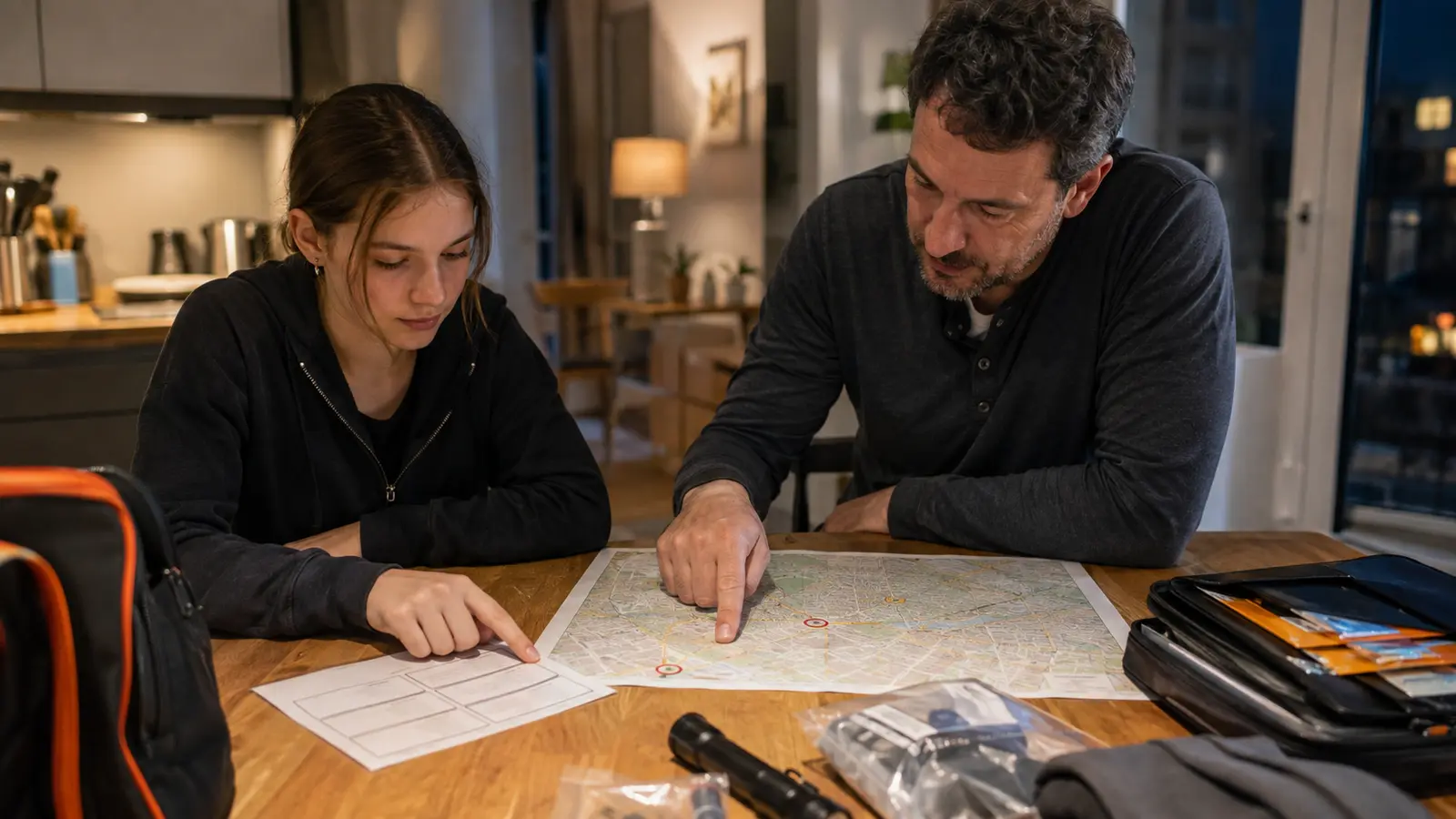
Create a household emergency plan
Define responsibilities, meeting points and alternatives before time pressure begins.
Open English lesson →
Build and rotate emergency supplies
Use everyday food and rotation instead of unrealistic hoarding.
Open English lesson →
Prepare drinking and utility water
Plan needs, containers, storage and careful use together.
Open English lesson →
Power outage: the first hours
Exclude immediate danger, establish the situation and conserve available energy.
Open English lesson →
Heat, light and cooking without power
Use alternatives without creating fire or carbon-monoxide danger.
Open English lesson →
Water, sanitation and refrigeration during an outage
Maintain hygiene and prevent secondary health problems.
Open English lesson →
Receive and understand warnings
Prepare several channels and turn a warning into concrete action.
Open English lesson →
Communication during network disruption
Organise batteries, contacts and messages so essential information gets through.
Open English lesson →
Go-bag and mobile emergency kit
Portable, personal and packed by essential function.
Open English lesson →
Shelter or evacuate during general emergencies?
Assess the hazard, building, time window and official instructions together.
Open English lesson →
Storm, heavy rain and flooding
Prepare the building, avoid dangerous areas and respect moving water.
Open English lesson →
Heat, cold and wildfire
Recognise temperature stress early and adapt your location in time.
Open English lesson →
Medication, care and assistive devices
Plan health-related dependencies with professionals and providers.
Open English lesson →
Hygiene and psychological stability
Protect health through simple routines, reliable information and realistic workload management.
Open English lesson →
Include children, animals and neighbours
Organise responsibility so nobody is considered in theory but forgotten in practice.
Open English lesson →
Conflict warning signs and personal decision triggers
Monitor developments without confusing rumours with an immediate warning.
Open English lesson →
The family plan during armed conflict
Organise contact, reunification and responsibility when people are separated.
Open English lesson →
Shelter from explosions and fire
Move away from windows, check for fire or smoke and keep at least one usable exit.
Open English lesson →
Immediate actions during an explosion or gunfire
Use the first seconds without exposing yourself to observe or record events.
Open English lesson →
Shelter or evacuate during conflict
Before leaving, compare the immediate danger indoors with the travel time, route hazards and confirmed safety of the destination.
Open English lesson →
Civilian low-profile behaviour, light and noise
Reduce needless attention without adopting a military appearance or unsafe hiding place.
Open English lesson →
Mines, unexploded ordnance and suspicious objects
Do not touch; gain distance, retrace the known route and report.
Open English lesson →
Checkpoints and civilian conduct
Notice early, communicate calmly and avoid sudden or ambiguous action.
Open English lesson →
Define shelter needs, duration and occupancy
A useful shelter starts with a clear purpose—not with as much concrete as possible.
Open English lesson →
Compare a basement conversion, existing structure and new build
The best location is the one whose risks, access and operation can be managed.
Open English lesson →
Plan a shelter in reliable stages
Assess, design, approve, build, commission and test are separate stages.
Open English lesson →
Inspect a basement room systematically
Odour, moisture, cracks, services and routes provide clues—not a remote diagnosis.
Open English lesson →
Assess structure, walls, ceilings and openings
Thickness alone reveals neither structural capacity nor protective performance.
Open English lesson →
Map building services and hazards
Services, storage, fuels and plant rooms influence whether a location is suitable.
Open English lesson →
Plan the shelter door and transition zone
A robust door works only when operation, escape width, seals and surroundings work together.
Open English lesson →
Plan an independent secondary exit
Two adjacent doors do not create an independent escape route.
Open English lesson →
Manage moisture, groundwater and drainage
Water is a persistent load and must be excluded or drained at its source.
Open English lesson →
Plan air paths and ventilation
Fresh air requires defined supply and extract paths, measurement and a safe operating state.
Open English lesson →
Select maintainable air filtration
A filter protects only against substances covered by its design, installation and replacement regime.
Open English lesson →
Plan fit-out, sleeping and fire load
Good space planning preserves routes, air distribution and access to equipment.
Open English lesson →
Frame a remote refuge realistically
Remoteness changes risks—it does not remove them.
Open English lesson →
Assess ground, slope and groundwater
What lies below ground determines foundations, water and excavation safety.
Open English lesson →
Develop a structural concept for earth-covered rooms
Earth and water pressure, uplift and temporary conditions require site-specific design.
Open English lesson →
Plan excavation and construction safely
The most dangerous condition may occur during construction, long before occupancy.
Open English lesson →
Coordinate shell, joints and penetrations
Every later service penetration interrupts structure or waterproofing and must be planned early.
Open English lesson →
Install waterproofing, drainage and protection layers
Waterproofing works only as a continuous, protected and tested envelope.
Open English lesson →
Make the main access safe and practical
An access route must work safely in rain, darkness, cold and while carrying loads.
Open English lesson →
Design an emergency exit to open ground
The emergency exit needs its own safe endpoint and must not become a dead end.
Open English lesson →
Protect external air and service points
A small external component can disable an entire function inside.
Open English lesson →
Store and dispense potable water safely
Quantity, hygiene, weight, rotation and dispensing must work together.
Open English lesson →
Plan sanitation and waste
Hygiene protects health, air quality and cooperation in confined space.
Open English lesson →
Provide low-voltage power and emergency lighting
Small, prioritised loads extend operating time and reduce risk.
Open English lesson →
Manage temperature and humidity
People and equipment generate heat and moisture even underground.
Open English lesson →
Monitor CO₂, CO, smoke and radon
Different hazards require suitable sensors, alarm thresholds and responses.
Open English lesson →
Organise supplies, medicine and storage
Supplies must be accessible, durable, auditable and matched to actual occupancy.
Open English lesson →
Maintain communications and situational awareness
Decisions need verified information, defined contact routes and timing.
Open English lesson →
Conduct a 24-hour occupancy drill
Only shared use reveals whether space, equipment and procedures work together.
Open English lesson →
Maintain, handle failure and return
A shelter remains ready only through recurring checks, clear limits and documented handover.
Open English lesson →
Frame a temporary earth refuge correctly
A simple earth-and-timber structure is a short-term weather refuge—not an improvised permanent bunker.
Open English lesson →
Select a site for an earth-and-timber refuge
Dry, understandable ground matters more than maximum remoteness.
Open English lesson →
Organise a safe earth-and-timber build sequence
Excavation, support, timber frame and roof are treated as designed temporary stages.
Open English lesson →
Coordinate timber roof, waterproofing and light earth cover
Earth cover provides visual and thermal screening but adds heavy, wet and variable loads.
Open English lesson →
Minimum operation: air, exits and fire safety
Even a few hours in a small room require measurable air quality and two clear routes.
Open English lesson →
Test and close a spartan refuge
A short supervised test reveals limits and prevents false confidence.
Open English lesson →