
1 · Alert
One person checks source, area and action.
Emergency preparedness · 18 min
Stress makes even simple agreements unreliable. A short plan prevents conflicting actions and assigns responsibility for medication, children, animals and information. It should be understood, printed and usable without a smartphone.
Decision compass
Four questions lead from observation to a clear, safer action.
What needs to be clarified now?
Remember: Observe → assess → choose a safer option → act.
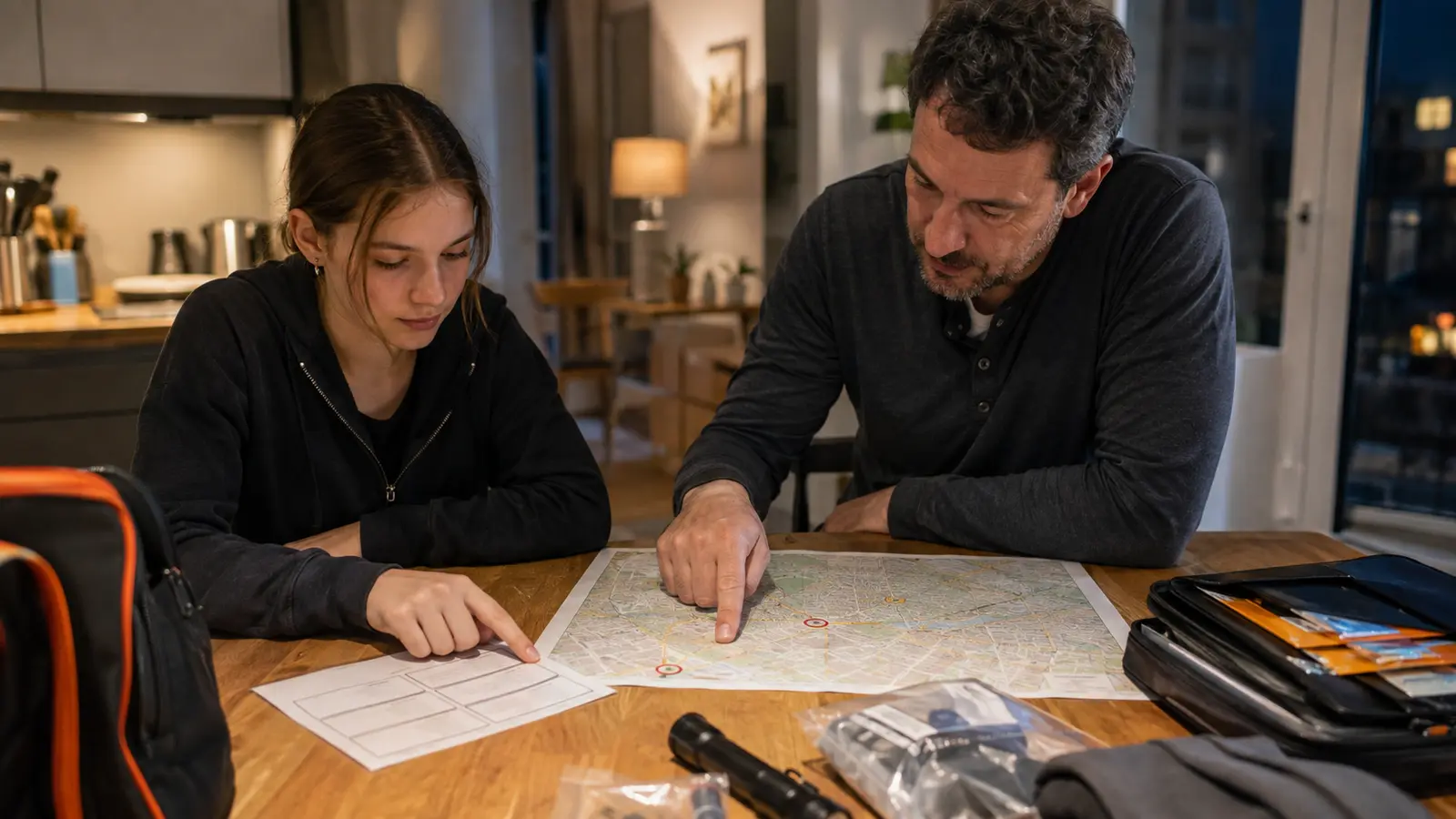
The plan names who does each task, where people meet and what they do if the first route or contact fails.
Every critical task needs an owner and a backup.
One person checks source, area and action.
Assign care, medication, animals, documents and utilities.
Nearby point when home is accessible.
Fallback outside the immediate hazard area.
One person consolidates status messages.
RESULT / SAFETY CHECKTest in low light with a timer. Correct unclear ownership or missing items immediately.
Decide who checks warnings, collects children or dependants, packs medication and documents, cares for animals and operates authorised shut-offs if necessary. Give every critical task a backup person and match duties to real availability and capability.
Choose one meeting point near home and another outside the immediate hazard area. Add a contact outside the region through whom separated household members can exchange messages. Keep phone numbers, addresses and essential medical details on paper in wallets, emergency bags and the document folder.
Walk through the plan in daylight and later with room lights switched off—without operating circuit breakers. Practise roles, meeting points, the contact card and collecting keys, torch, shoes, medication and animal carrier. Stop if anyone becomes uncertain, then record missing items, unclear roles and the time required.
Decision training
Correct: B. Known locations and time windows still work when spontaneous communication fails.