
Likely × low impact
Monitor and cover through daily routines.
Emergency preparedness · 16 min
Begin by listing the disruptions that can affect your location and household. Record the building, season, health and mobility needs, and every essential service that depends on electricity, water, communications or transport. Use this list to decide what must keep working and for how long.
Decision compass
Four questions lead from observation to a clear, safer action.
What needs to be clarified now?
Remember: Observe → assess → choose a safer option → act.
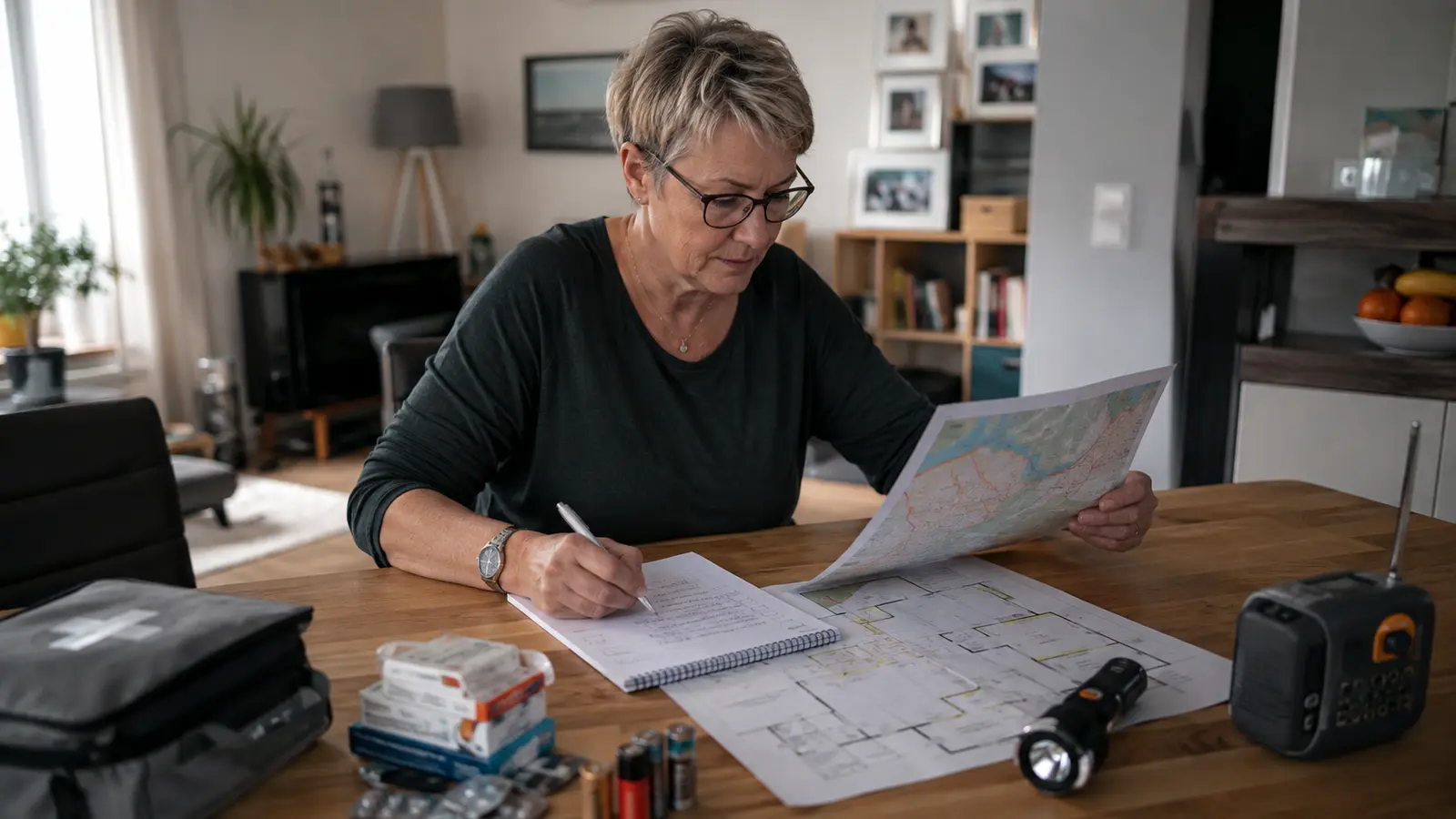
For each hazard, record who or what is exposed, what already protects them and what is still missing.
Assess likelihood, impact and personal dependency—not the headline.
Monitor and cover through daily routines.
Priority 1: prepare and practise now.
Record it without overinvesting.
Plan a fallback and clear triggers.
RESULT / SAFETY CHECKCheck: connect the top three risks to water, information, heat, medication or mobility.
A storm, technical failure or cyberattack may have different causes but create the same household effects: loss of electricity, communications, water, shops or transport. Secure basic functions such as light, information, water, warmth, medication and communication first.
Record flood, heavy-rain, wildfire, slope and heat exposure as well as dependence on lifts or electric doors. Identify safe rooms, escape routes and authorised shut-offs. Ask the landlord, utility or a qualified contractor how they may be operated; do not test gas or electrical equipment when responsibility is unclear.
Record medication, refrigeration needs, mobility, communication aids, allergies, animals and care duties. Add useful skills and reliable neighbourhood contacts. List the supplies, skills, responsible person and reliable contact needed for each essential task.
Decision training
Correct: B. Different emergencies often produce the same household disruptions.