
Before you start
- Check the immediate environment, weather, available time and personal condition.
- Prepare the required equipment and define the point at which you will stop or change the plan.
Body and weather · 9 min
Air temperature alone does not describe cold stress. Wind, moisture, sunlight, activity and clothing jointly determine how quickly a person cools.
Lesson guide
Prepare, complete each step and verify the result.
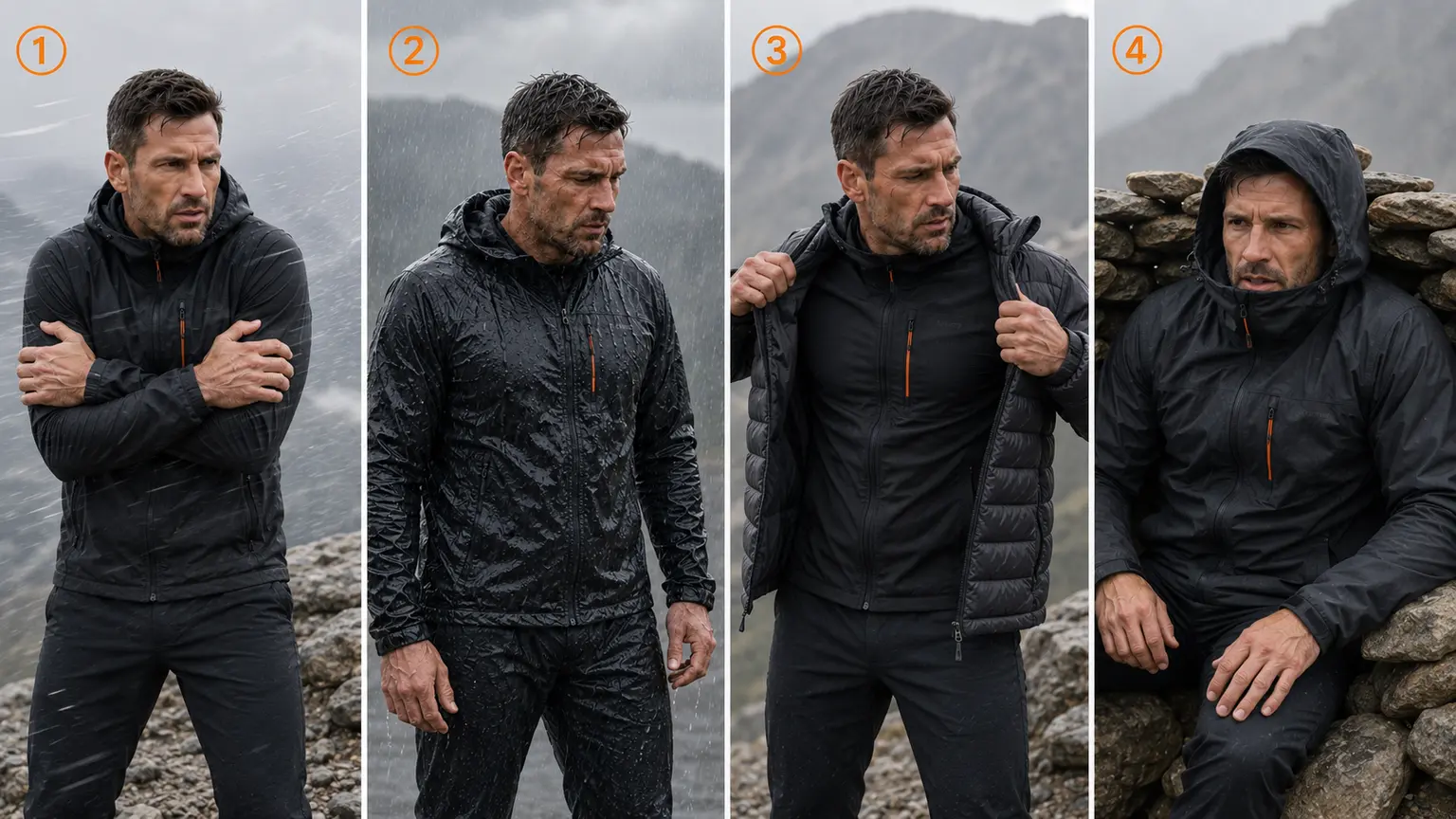
The more stress factors occur together, the earlier the situation must change.
Persistent shivering, declining finger dexterity, unusual fatigue, slowed thinking or unsteady walking are warning signs. Do not leave the affected person alone.
Leave wind and moisture, replace wet clothing, add insulation and prevent further cooling. Call emergency services after clear deterioration, confusion or altered consciousness.
Keep a severely hypothermic person still and handle them gently. Do not use intense direct heat, rub the body or impose unnecessary physical exertion.
Decision drill
Correct: B. Slowed responses may indicate progressing hypothermia. Stop further cooling and obtain professional help.