
Before you start
- Check the training area, equipment and pain-free movement before increasing load.
- Set intensity, roles and a stop signal before partner or contact work.
Physical foundations · Lesson 01
This session measures how long you can move while breathing steadily and keeping each exercise technically controlled. Record the starting result so later sessions can be compared with it.
Lesson guide
Build and practise a skill under control, then check it against clear criteria.
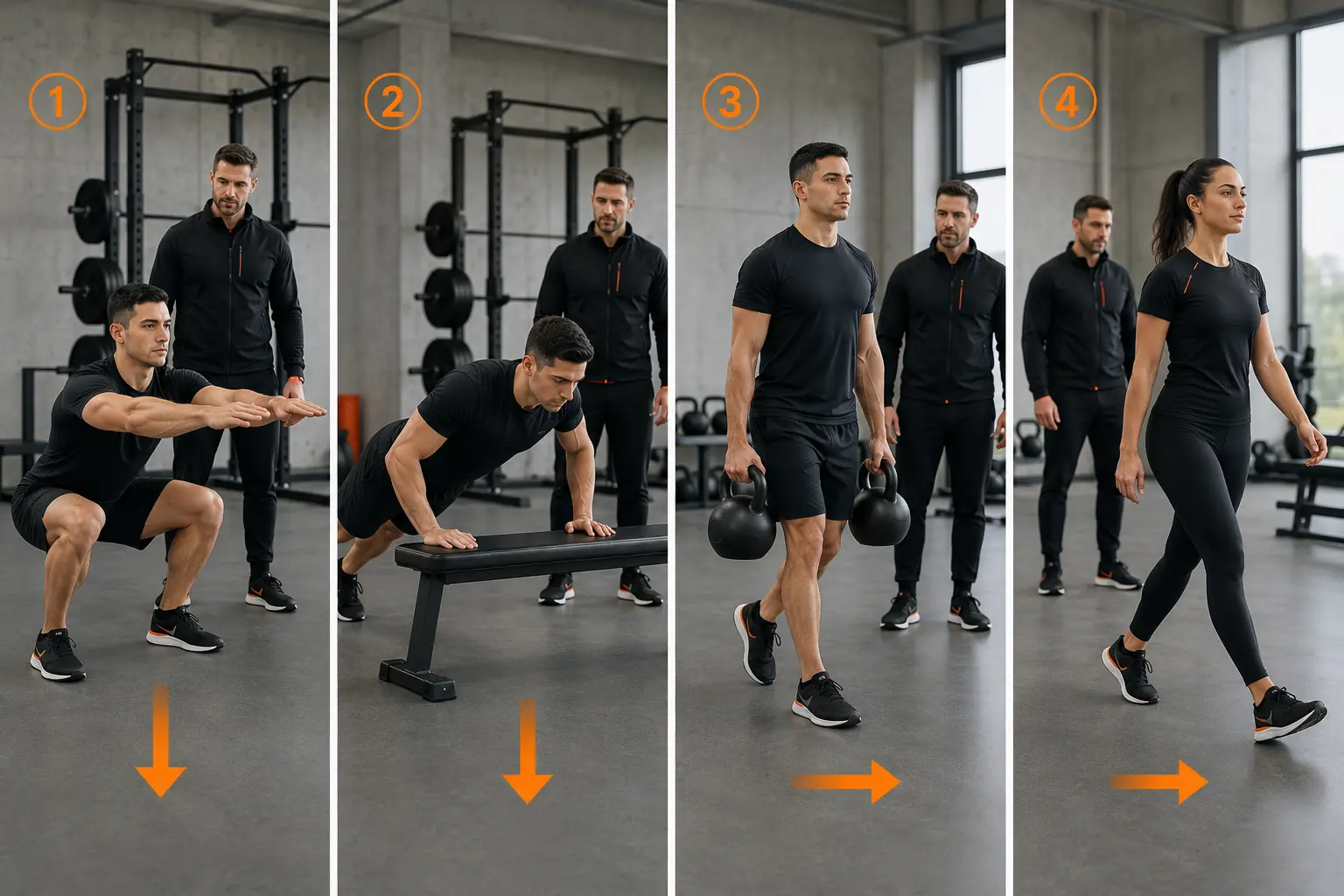
A controlled circuit combines squatting, pushing, carrying and active recovery.
A controlled structure with a clear duration and traceable objective.
Perform five slow circles each with ankles and shoulders, then bend and extend hips and knees without bouncing. Walk easily for two minutes: breathe in through the nose and exhale a little longer without holding your breath.
Complete three calm rounds: 8–12 squats with hips moving back and knees following the direction of the feet; 6–10 push-ups with hands on a stable raised surface and a straight trunk; carry a light backpack close to the body for 30–45 seconds; then walk briskly for two minutes. Check breathing and posture between exercises.
After each round, perform one simple movement cleanly and deliberately re-establish distance. Quality matters more than speed.
Lower the heart rate gradually, check breathing and record the perceived exertion briefly.
Decision drill
Correct: B · Training should be demanding but controllable. Reducing the load lets you restore controlled breathing and correct movement before repeating the exercise.
Work capacity grows through repeatable quality—not one-off exhaustion.