
Lesson 01 · Awareness and prevention
Recognise conflict early
Keep your awareness. Choose your position. Act early.
Many dangerous situations are easier to avoid before someone has closed the distance or blocked the way back. Awareness does not mean living in constant fear. Reduce avoidable limits on perception, choose positions that provide an overview, and respond early and discreetly when several changes form a concerning pattern.
The four-step routine
Put the phone away, check the doors and nearby people, then move before the situation becomes urgent.
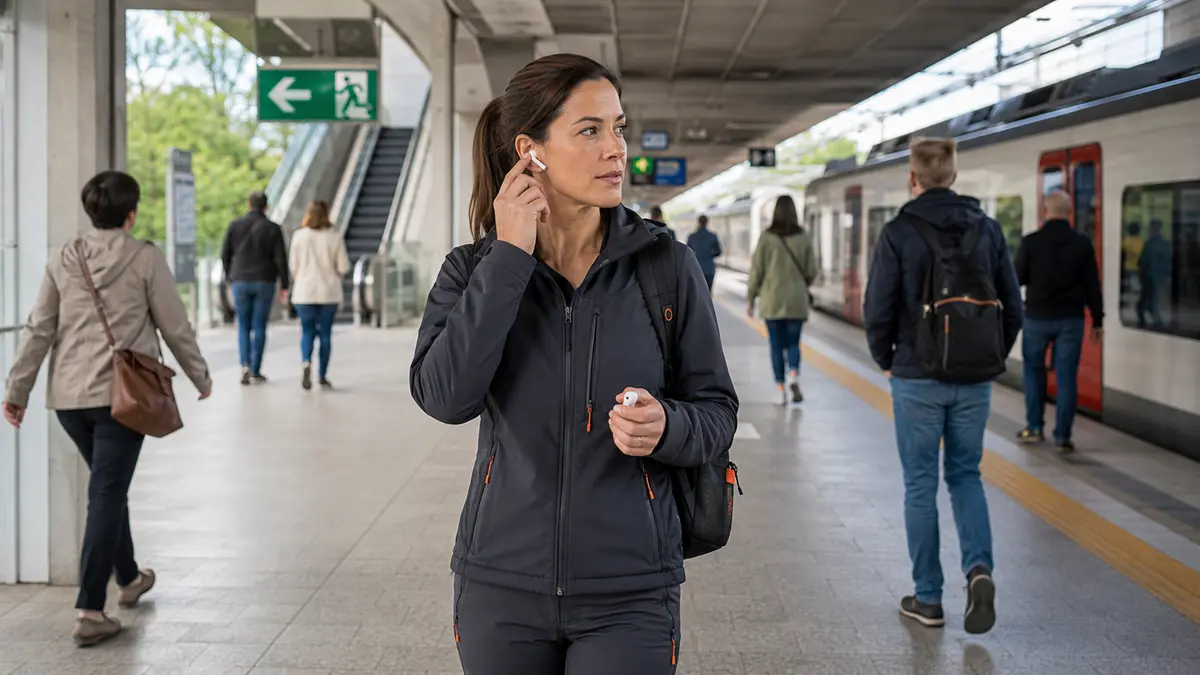
Keep your hearing available
Headphones, loud music and active noise cancellation can mask footsteps, calls, vehicle sounds or changes behind you. In confusing environments, reduce the volume significantly, use transparency mode or remove at least one earbud. Technology can improve comfort, but it should not remove every warning signal.
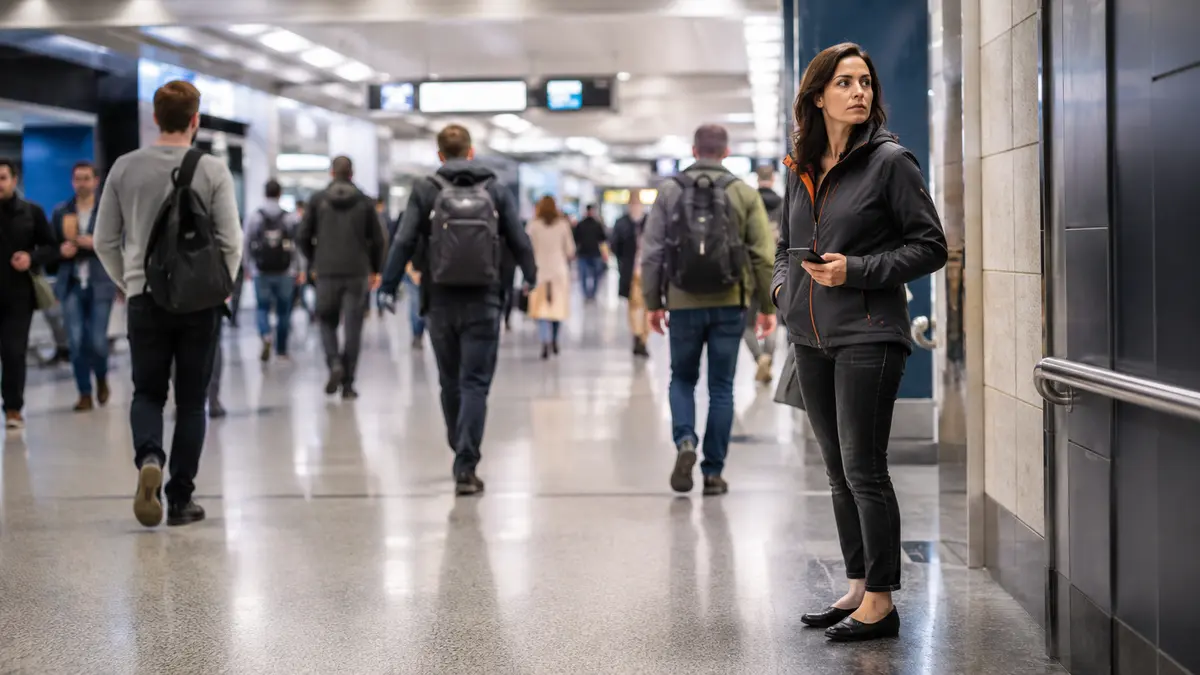
Interrupt screen use deliberately
Extended scrolling captures both gaze and attention. For messages, navigation or tickets, step safely out of the flow of people, check your surroundings, complete the task and put the phone away. Look up regularly while walking; do not remain fixed on the screen near doors, platforms, crossings or transitions.
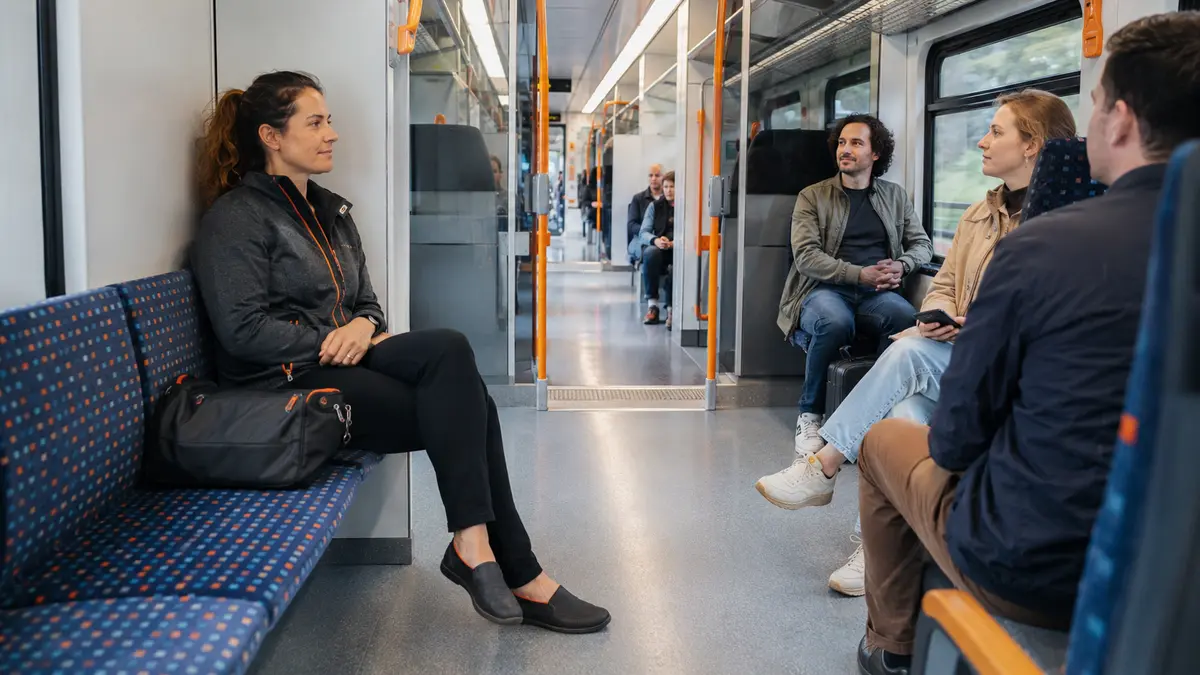
Choose a position with an overview
On a bus or train, sit or stand where you can see the aisle, doors and part of the passenger area. A wall or solid surface behind you can limit unseen approaches. Proximity to other passengers, staff, an intercom or a well-lit exit is usually preferable to an isolated position. Do not block doors or escape routes yourself.
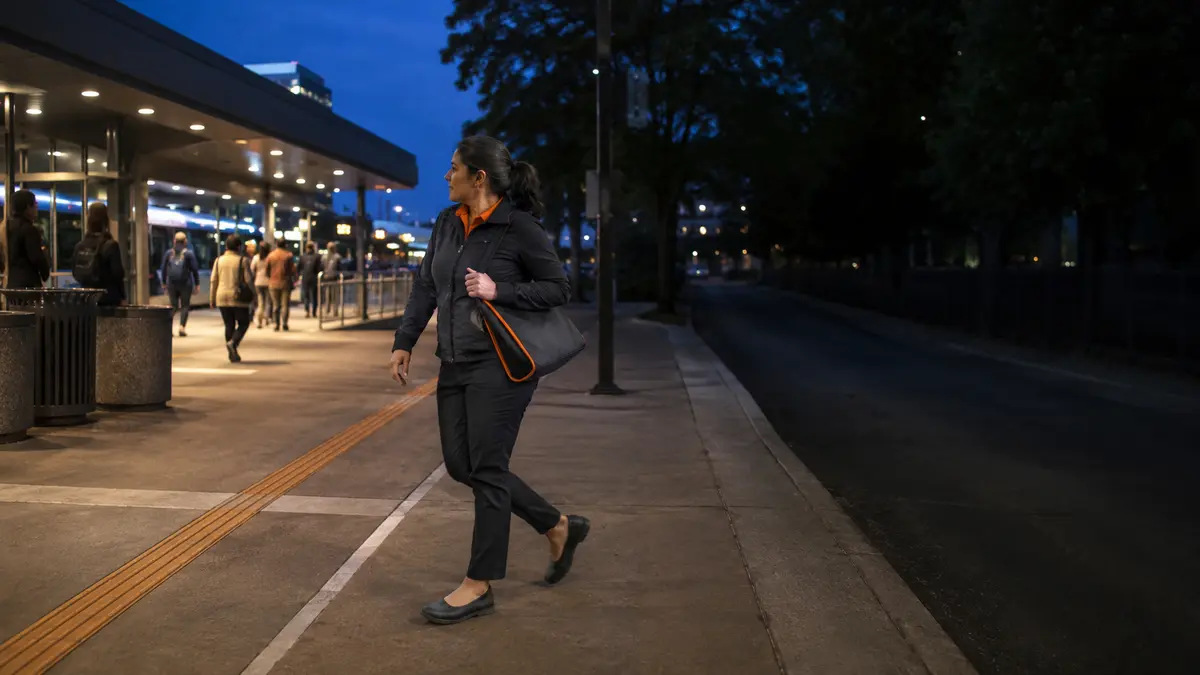
Stay mobile and move early
Well-fitting, flat shoes that stay secure on the foot make fast walking, changes of direction, stairs and uneven ground easier; high or poorly fitting shoes can restrict those options. Keep bags close and hands as free as possible. This is neither blame nor a guarantee of safety: the key is to move early towards a bright, busy or supervised place when a situation develops badly.
Sound decisions
- When changing place or transport, briefly identify exits, passenger flow and the nearest safe point of contact.
- Adapt headphones and phone use to the environment instead of using them automatically.
- Consider overview, door access and proximity to others when choosing a position.
- When several warning signs align, change seat, carriage, route or stop early.
- Choose practical footwear and close-fitting luggage for longer or late journeys.
Avoid
- Completely isolating yourself with a screen and noise cancellation.
- Remaining in an empty, poorly visible area when a better position is available.
- Assessing someone as dangerous solely because of appearance, age or origin.
- Waiting out of politeness until distance or an exit is already blocked.
- Blaming clothing or footwear for an assault.
- Living in permanent maximum alert.
Knowledge check
What preserves the most options?
You are sitting in an almost empty train in the evening, wearing headphones and scrolling. One person changes carriages with you twice and sits much closer despite many empty seats. What is the best early response?
- AKeep scrolling so you do not appear impolite.
- BRemove the headphones, put the phone away, move near a group by the door and involve staff or an emergency intercom if the person keeps approaching.
- CStare aggressively and confront the person.
- DWait until the last stop and get off alone.
Show answer
B. The relevant point is not one personal characteristic but a repeated, matching change in behaviour. Restoring perception, improving position and making support accessible early preserves the greatest number of safe options.
Keep hearing and vision available, choose a position near people and exits, and move as soon as repeated warning signs appear.