
Lesson 02 · Prevention
Distance and movement
Stay stable. Change the angle. Keep the exit open.
Choose enough distance to react and reach an exit. The useful distance changes when the other person moves, the space narrows or furniture blocks your route. Move early so you remain balanced and can leave without starting a confrontation.
Decision compass
Decide safely
Four questions lead from observation to a clear, safer action.
What needs to be clarified now?
What must I notice first?
- Start in a familiar, low-risk setting and identify a clear exit or support option.
- Separate observable behaviour from assumptions about a person.
Remember: Observe → assess → choose a safer option → act.
Recognise the situation and act early
The four illustrations connect perception, positioning and a safer exit.
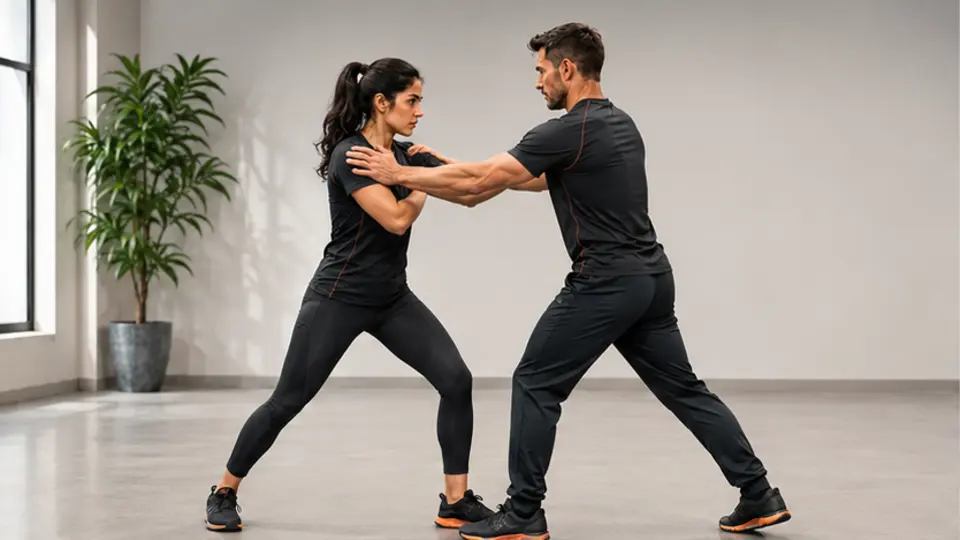
Stance
Place the feet slightly offset, keep the knees relaxed and the weight centred. Avoid standing rigidly or with an excessively wide base.
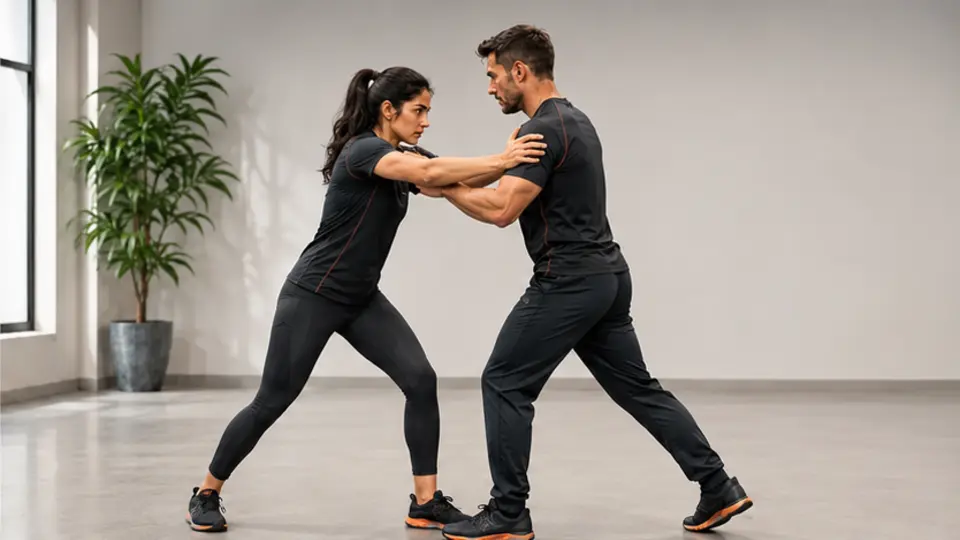
Angle
Move diagonally or laterally where possible instead of retreating blindly in a straight line. Short steps preserve balance and keep more of the surroundings in view.
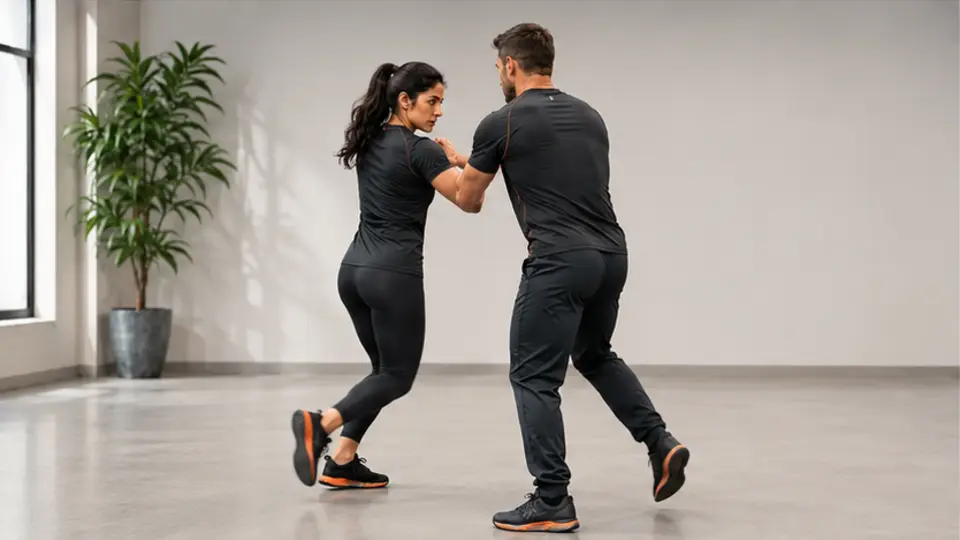
Leave the direct line
Step to the side so you are no longer directly in front of the person. Keep both feet under you, turn towards the open route and continue towards the exit. Use a stable object as a barrier only when one is actually present.
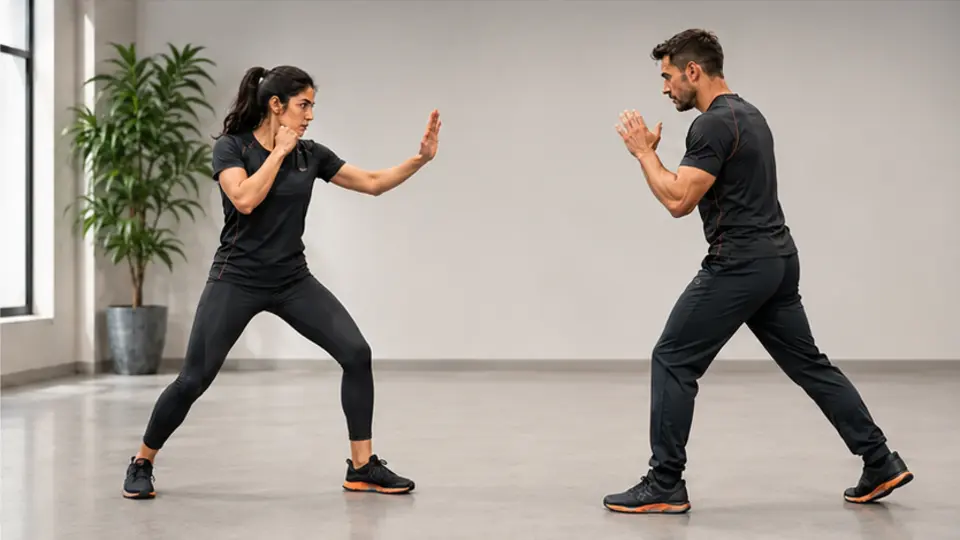
Exit
Movement serves the route out—not a prolonged exchange. Once a safe way is open, take it and seek help.
Sound decisions
- Use small, controlled steps
- Keep a broad field of view
- Keep open hands around chest height
- Move laterally out of a direct line
Avoid
- Crossing the feet
- Moving only backwards
- Remaining trapped in a corner
- Fixating on one person and losing the wider view
Knowledge check
Choose the option that preserves safety
A person becomes louder and repeatedly closes the distance. Chairs are behind you and a clear exit is to the side. What should you do?
- AWalk straight backwards between the chairs.
- BRemain still and push the person away.
- CMove diagonally towards the clear exit, preserve distance and speak clearly.
- DTurn around and sprint without checking the surroundings.
Show answer
C. Diagonal movement preserves stability, increases distance and brings you closer to the safer exit.
Movement is useful when it creates more space, a better overview and a safer exit.