
Lesson 07 · Prevention
Train safely
Know the limits. Manage intensity. Check quality.
Self-protection training is useful only when it is controllable, understandable and responsibly structured. Throws, joint locks, choking techniques, weapon scenarios and intense simulations belong exclusively in qualified, supervised in-person training.
Decision compass
Decide safely
Four questions lead from observation to a clear, safer action.
What needs to be clarified now?
What must I notice first?
- Start in a familiar, low-risk setting and identify a clear exit or support option.
- Separate observable behaviour from assumptions about a person.
Remember: Observe → assess → choose a safer option → act.
Recognise the situation and act early
The four illustrations connect perception, positioning and a safer exit.
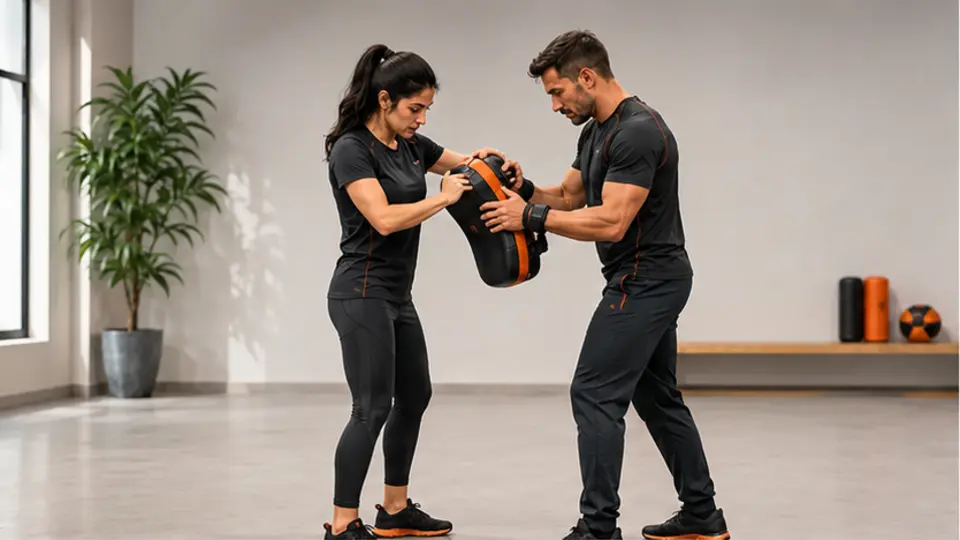
Check quality
Objectives, qualifications, safety rules and procedures for injuries should be transparent before training begins.
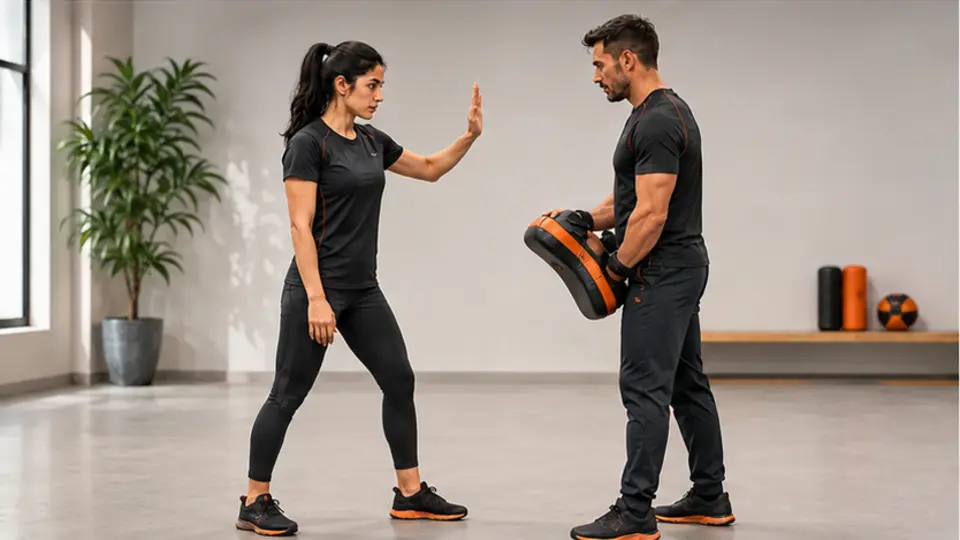
Agree stop signals
Before every partner drill, agree two stop signals: a clear word such as ‘stop’ and repeated tapping with hand or foot if speaking is not possible. Either signal ends resistance and movement immediately. Both people release contact, create distance and check whether practice can continue safely.
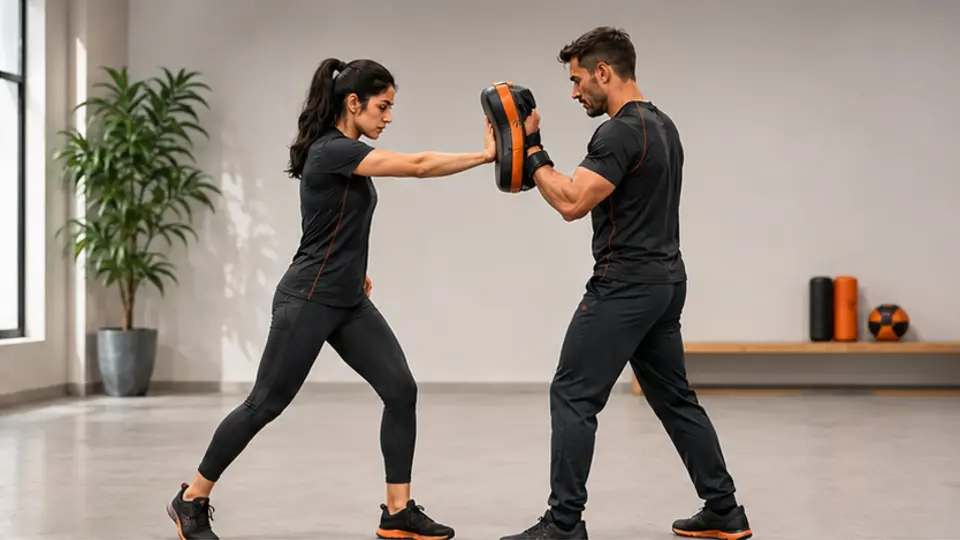
Manage intensity
Begin slowly, cooperatively and with technical precision. Increase speed and resistance only in controlled stages.
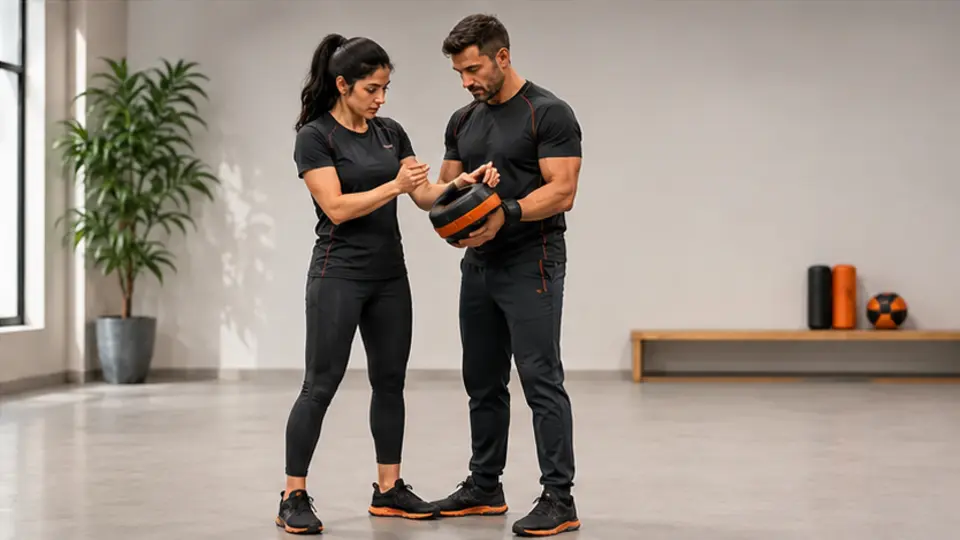
End responsibly
Stop after pain, loss of control or uncertainty, discuss what happened and seek medical assessment when appropriate.
Sound decisions
- Clarify safety rules before the drill
- Use suitable protective equipment
- Increase intensity in documented stages
- Discuss legal boundaries regularly
Avoid
- Surprise attacks without consent
- Pressure to continue despite pain
- Instructor worship instead of transparent methods
- Dangerous techniques without supervision
Knowledge check
Choose the option that preserves safety
A course advertises maximum hardness, uses no stop signals and places beginners under high resistance immediately. How should you assess it?
- AEspecially realistic and therefore ideal.
- BUnnecessarily risky; it lacks a safety structure and progressive intensity.
- CUnproblematic as long as everyone is an adult.
- DSuitable if no protective equipment is used.
Show answer
B. Training does not become realistic by becoming uncontrolled. Good instruction uses clear rules, increases speed and resistance progressively, and stops immediately when safety is compromised.
Use agreed stop signals, increase resistance gradually and stop immediately when control is lost.