
Altitude warning signs
Ascend gradually. Treat headache, nausea, dizziness and poor coordination seriously. Do not continue upwards when symptoms worsen; descend and arrange medical help after severe symptoms.
Travel survival
Use the environment-specific checks below before choosing a route, shelter or emergency action.
Weather, altitude, fall exposure and delayed rescue make an early turnaround more important than reaching the summit.
Ascend gradually. Treat headache, nausea, dizziness and poor coordination seriously. Do not continue upwards when symptoms worsen; descend and arrange medical help after severe symptoms.
Check forecasts and warnings before departure. Growing storm clouds, gusts, thunder or rapidly falling visibility are reasons to leave summits, ridges and exposed ground early.
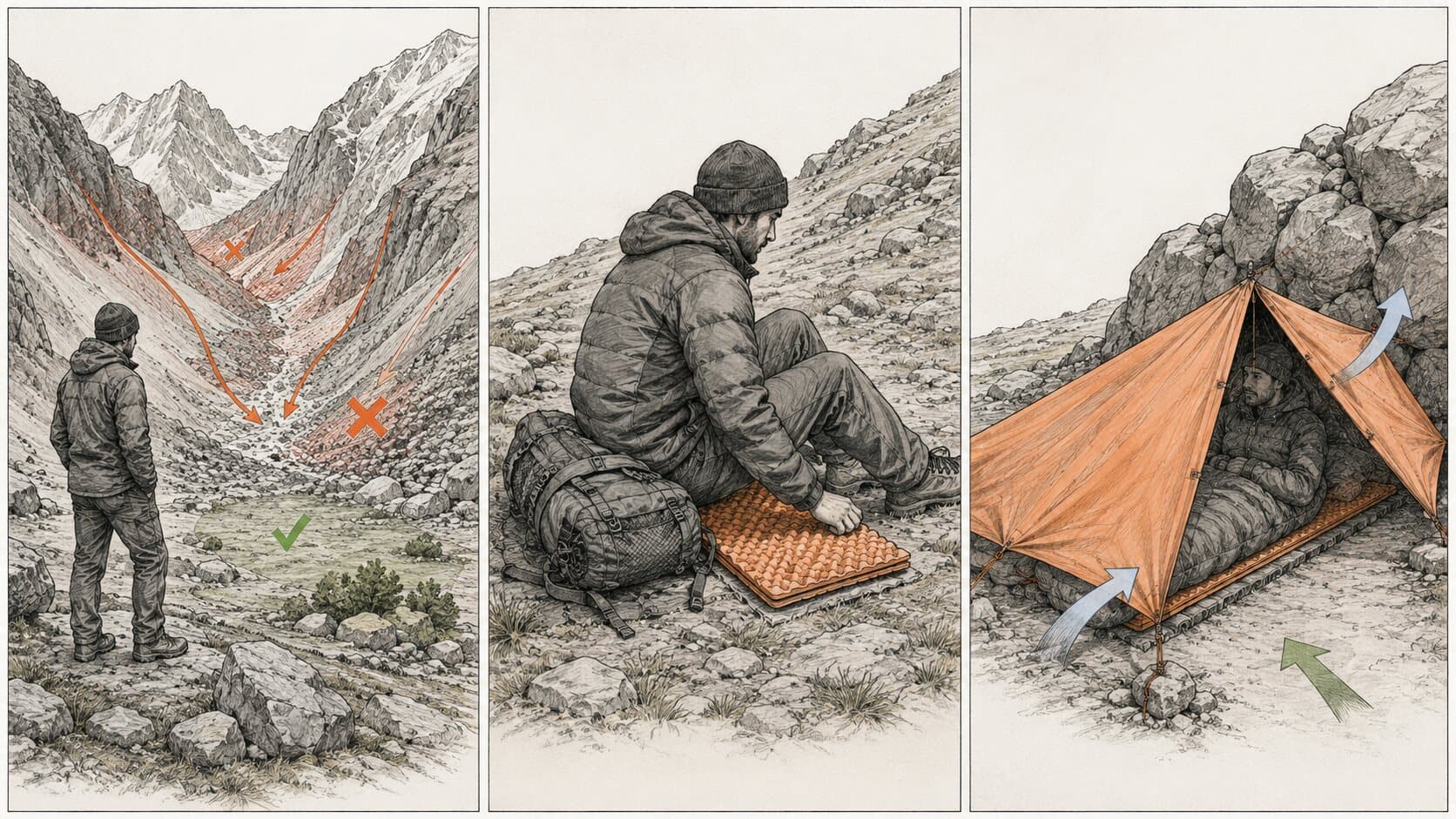
Choose shelter outside gullies, rockfall and avalanche paths. Insulate from the ground, protect wet clothing from wind and share the location. Move only when the route is clearly safer than waiting.
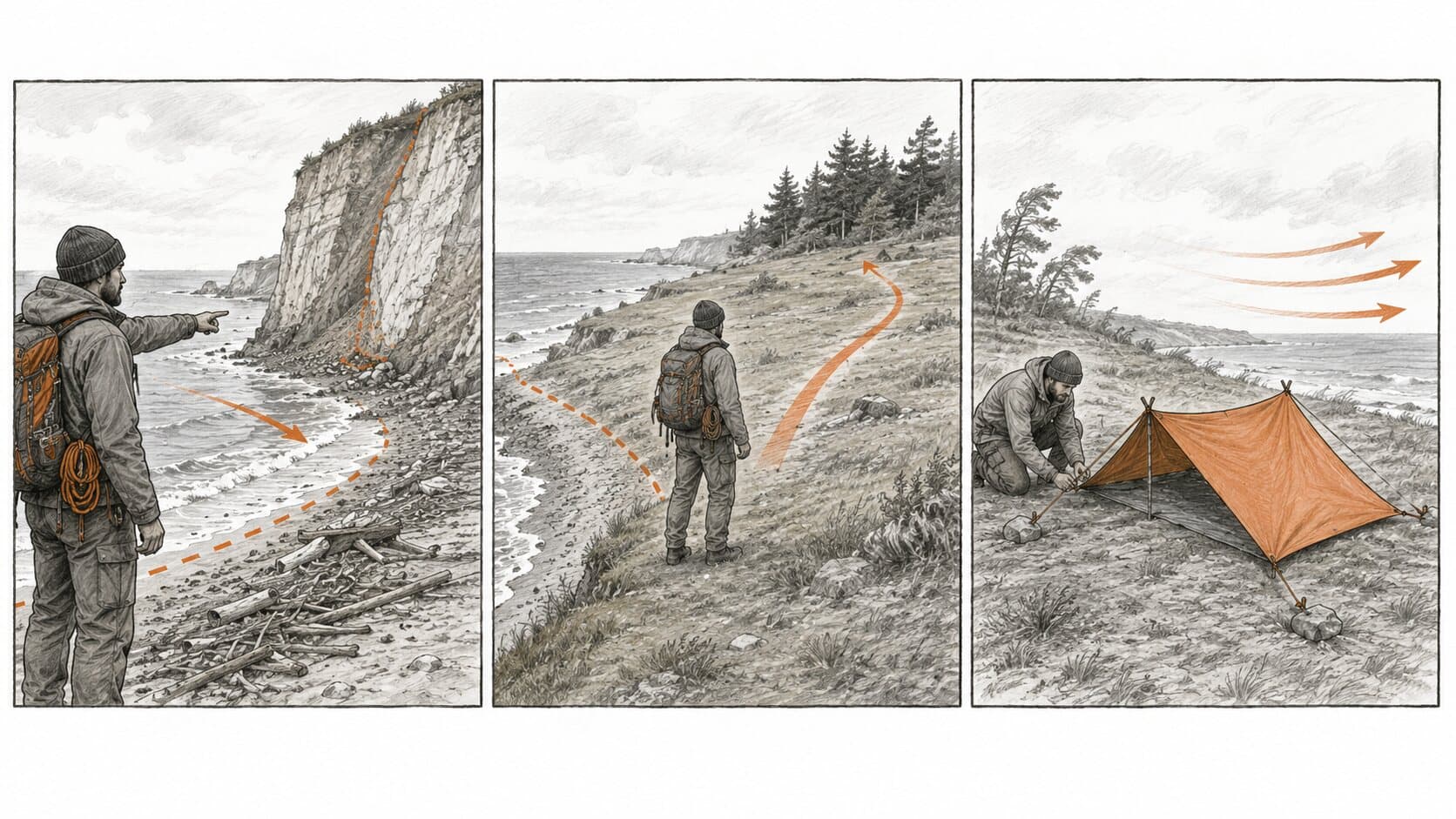
Tides, surf, wind and unstable cliffs can remove an apparently easy return route within minutes.
Use official tide tables and signs. Include a time margin and never enter a sandbank, cave or rock platform unless the exit remains usable throughout the visit.
Do not exhaust yourself by swimming directly against a strong current. Float if possible, signal for help, swim parallel to the shore out of the narrow current and then angle back towards land.
Wet clothing and wind can cause dangerous cooling even in mild weather. Do not drink seawater. Use carried fresh water or a source that has been assessed and treated for the likely contamination.

Dense vegetation reduces visibility and orientation while dead branches, falling trees, fire and wet ground create local hazards.
Mark the last confirmed position on an offline map. Use compass bearings, paths and unmistakable terrain features together; do not follow an assumed direction deeper into the forest.
Look up before pitching. Avoid dead standing trees, suspended branches, steep slopes, dry stream beds and waterlogged hollows. Use a raised, drainable site with a visible exit route.
Use fire only where permitted and where sparks cannot reach roots, peat or dry vegetation. Prepare extinguishing water first, keep the tarp outside the heat and spark zone and extinguish the site completely.

Heat, rapid water loss, vehicle failure, sandstorms and flash floods require strict control of movement and shelter.
Drink regularly and record remaining water. Reduce movement, create shade and loosen unnecessary layers while protecting skin. Confusion, collapse or hot altered skin require urgent cooling and emergency help.
Stop safely, make the vehicle visible and share the position. A vehicle offers shade and is easier to locate than a person on foot. Walk only when the destination, route, distance and water requirement are confirmed.
During blowing sand, protect eyes and airways and shelter away from traffic. Never camp or park in a dry channel: rain far away can produce a fast flash flood without local rainfall.